
When people ask about scalp massage benefits, the honest answer is that it feels wonderful and may offer a few small perks, but the research is still early. A few minutes of gentle pressure at the end of the day can be genuinely relaxing, and a handful of small studies hint at other possible effects. We think it is worth knowing what the evidence actually says, without the hype. This article is informational and is not medical advice.
Below we walk through five potential benefits, framing each one carefully. Where studies exist, they tend to be small, preliminary, and far from definitive. So treat scalp massage as a pleasant ritual that might do a little more, not as a treatment with guaranteed outcomes.
5 Possible Scalp Massage Benefits, Framed Honestly
Here are the potential upsides people most often ask about. None of these are promises, and we have flagged where the evidence is thin so you can set realistic expectations.
1. It can feel relaxing and may ease everyday stress
The most reliable thing we can say is that scalp massage feels good. Slow, rhythmic pressure on the head and neck is widely described as relaxing, and some small studies on massage in general have looked at reductions in self-reported tension. The effects reported are modest and short-term, and stress is influenced by many factors at once. Still, if a few quiet minutes help you unwind, that alone can be a worthwhile reason to try it.
2. It may make a thorough cleanse feel more complete
Working your fingertips or a soft tool across the scalp while you shampoo can help you cover the whole head methodically. Many users say it makes a wash feel more thorough, especially when paired with a clarifying step. This is largely about sensation and technique rather than a proven deep-cleaning effect, but pairing massage with a good scalp scrub may make your routine feel more satisfying. Be gentle, since vigorous scrubbing can irritate the skin.
3. Small studies on hair thickness are preliminary
This is the benefit people are most curious about, and also where caution matters most. One often-cited small study followed just nine men doing four minutes of standardized scalp massage daily and reported a measurable increase in hair thickness over several months. You can read the abstract on PubMed. With so few participants and no large follow-ups, the findings are preliminary and cannot be generalized. They are interesting, not conclusive, and they do not establish that massage regrows lost hair.
4. You may notice a local circulation sensation
Many people describe a warm, tingling feeling on the scalp during and after a massage. It is reasonable to associate that sensation with local stimulation of the skin. We want to be clear, though, that a pleasant sensation is not the same as a proven, lasting change in blood flow or hair outcomes. The current evidence does not let us claim more than that it often feels stimulating in the moment.
5. It can become a calming daily ritual
Beyond any physical effect, scalp massage can be a small act of self-care you look forward to. Building a short, consistent ritual, perhaps with a few drops of a nourishing scalp oil, gives you a moment to slow down. For many readers, that sense of routine and care is the most dependable benefit of all, and it costs nothing but a few minutes.
How to Do a Scalp Massage
The technique is simple and forgiving. Use the pads of your fingertips, not your nails, and apply gentle, comfortable pressure. Move in small circles across the whole scalp, including the sides and the back near the neck, for roughly three to five minutes.
You can do it dry while watching TV, or in the shower as you shampoo or condition. If you like, work in a light oil for slip on dry hair. Keep the pressure mild and steady; this should feel soothing, never painful. There is no need to press hard or rush.
Tools: manual brush vs electric massager
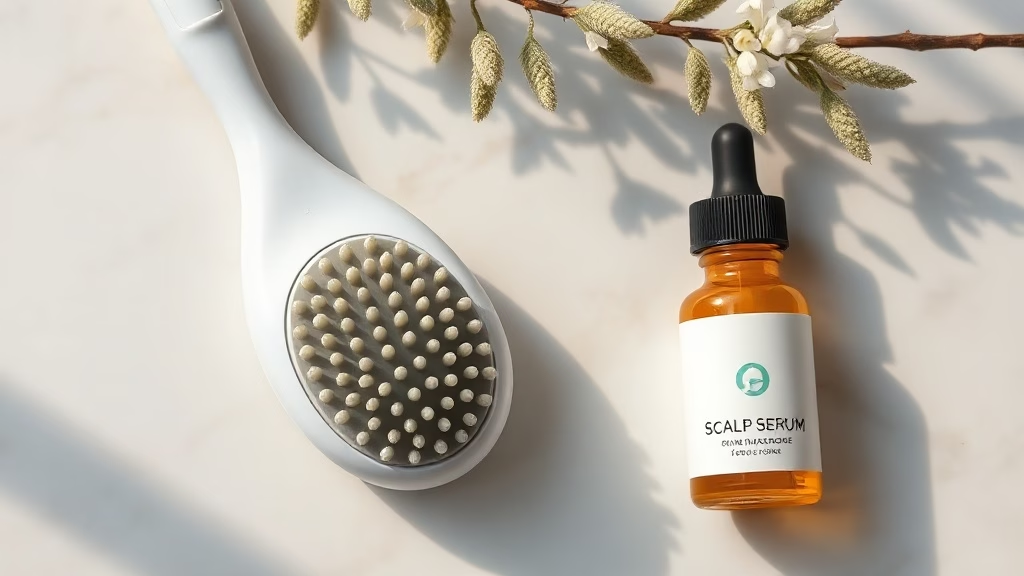
You do not need any equipment, but a tool can make the motion easier and more consistent. A manual silicone brush is inexpensive, easy to control, and travels well. An electric massager does the small circular motion for you, which some people find more relaxing and hands-free.
Either can work; the right choice comes down to preference and budget. If you want to compare options, see our guide to the best scalp massager, or look at the gentle, easy-to-hold Maxsoft scalp massager we like for everyday use. Whatever you pick, keep the pressure soft.
Scalp Massage FAQ
Does scalp massage regrow hair?
We cannot say it does. The evidence is limited to small, preliminary studies, and these cannot confirm that massage regrows hair or treats hair loss. It may be a pleasant complement to a routine, but it is not a proven remedy. If hair loss concerns you, speak with a qualified clinician.
How long and how often should I do it?
A few minutes is plenty. Many people aim for around three to five minutes, once a day or a few times a week. Consistency tends to matter more than duration, and there is no need to overdo it. Let comfort be your guide.
Should I massage on dry or wet hair?
Both are fine. Dry massage is convenient and can use a little oil for slip, while wet massage pairs naturally with shampooing. Choose whichever fits your routine. If you use a tool in the shower, make sure it is suitable for wet use.
Can scalp massage hurt?
It should not. If you feel pain, soreness, or irritation, you are likely pressing too hard or going too long, so ease off. Avoid massaging over cuts, sunburn, or inflamed skin, and stop if anything feels uncomfortable.
The Bottom Line
Scalp massage is relaxing, low-risk, and easy to fit into your day, which makes it an appealing little ritual. The broader claims, especially around hair growth, rest on small and preliminary research that should not be oversold. Enjoy it for how it feels, keep your expectations realistic, and treat any standout study as a starting point rather than proof. As always, this is general information, not medical advice.