
Electric scalp massagers have moved from spa accessory to mainstream wellness product in the past few years — and unlike a lot of beauty gadgets, there’s a reasonable physiological basis for why they might actually work. The question is whether the specific benefits you’re hoping for match what this type of device can realistically deliver.
This guide covers what electric scalp massagers do mechanically, what the research says about their effects, and how to use them effectively. If you’re already decided on buying one, our best scalp massager guide ranks three devices across motor quality, brush tip design, and waterproofing.
What an Electric Scalp Massager Actually Does
At the mechanical level, an electric scalp massager oscillates or rotates soft silicone tips against the scalp at a frequency ranging from roughly 6,000 to 12,000 rpm depending on the device. This does three things:
- Increases local blood circulation — the mechanical vibration temporarily dilates capillaries in the scalp. More blood flow means more oxygen and nutrients reaching the follicle bed, which is consistent with the conditions that support a healthy hair growth environment.
- Loosens product buildup and dead skin — the silicone tips act as a gentle exfoliant on the scalp surface. This is distinct from a scrub but achieves a similar result: lifted buildup that makes it easier to wash out with shampoo.
- Reduces muscle tension — the scalp has a muscle layer (the occipitofrontalis) that accumulates tension from stress and posture. Vibration massage is effective at reducing myofascial tension, which is why scalp massage reliably feels relaxing and why people with tension headaches find it helpful.
What the Research Says
A small but often-cited 2016 study published in ePlasty found that 4-minute daily scalp massages over 24 weeks were associated with increased hair thickness compared to a control group. The proposed mechanism was mechanical stretching of dermal papilla cells in the follicle, which may upregulate hair-cycle genes.
This study used manual massage, not electric devices, but subsequent research has found that electric massagers produce a more consistent massage stimulus than manual techniques — which is relevant because consistency and daily compliance are the key variables in that type of study.
One important note: all scalp massage research is on generally healthy hair follicles. If hair loss has a medical cause (alopecia areata, hormonal imbalance, thyroid dysfunction, nutritional deficiency), scalp massage doesn’t address the root issue. Our scalp massage benefits guide covers the evidence in more detail.
Electric vs. Manual: Is the Device Worth It?
Manual scalp massage (fingertips, 4 minutes daily) delivers many of the same benefits as an electric device. The advantages of electric:
- Consistency — the motor maintains the same pressure and frequency throughout the session; manual massage varies with fatigue and attention.
- Reach — the handle makes the crown and back of the head much easier to reach than fingers alone.
- In-shower use — most electric massagers are waterproof, making it practical to use during shampooing, which both loosens buildup and distributes shampoo more evenly.
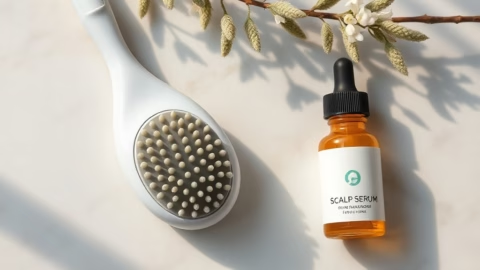
- Paired treatment delivery — using an electric massager immediately after applying a scalp serum may improve penetration by increasing local blood flow at the application site.
What to Look for When Buying
Tip Design
Soft silicone tips are universally better than hard nubs for scalp use — they flex with scalp contours and don’t create pressure points. Flat, wide tips cover more surface area; narrow, pointed tips can focus on specific tension spots. Some devices ship with interchangeable tips for both uses.
Motor Type
Oscillating motors (tips move back and forth) tend to feel more like manual kneading. Rotating motors produce a spinning motion that’s more effective for loosening buildup but can feel harsher if the tip design is wrong. Both work well for circulation; for people with sensitive scalps, oscillating is usually more comfortable.
Waterproofing
IPX7 rating means fully waterproof — safe for use in the shower, submersible to 1 meter. IPX4 means splash-resistant only. If you plan to use the device while shampooing, IPX7 is worth the price premium. Our scalp massager rankings note the exact waterproof rating listed for each device.
Battery Life
4-minute daily sessions add up to about 2 hours of use per month. Most devices rated for 3+ hours of use per charge are fine for a month of daily sessions between charges. USB-C charging is a practical consideration — proprietary charging cables are a significant annoyance.
How to Use an Electric Scalp Massager
- Start at the hairline, work in sections toward the crown, then down the back and sides.
- Use gentle pressure — let the motor do the work. Pressing hard doesn’t increase benefit and can cause irritation over sensitive follicles.
- 4 minutes total is the session length used in the most-cited research. More isn’t necessarily better — the scalp is skin and can be over-stimulated.
- Daily use is ideal if you’re using it for circulation or growth support. Weekly use during shampooing is fine if your main goal is cleansing.
- Clean the tips after each use — scalp skin cells and shampoo accumulate on silicone tips. Rinse with warm water and mild soap, let air dry.
Who Shouldn’t Use One
Avoid electric scalp massagers on broken, irritated, or infected scalp skin — the vibration can worsen inflammation. If you have an active scalp condition (psoriasis flare, seborrheic dermatitis, folliculitis), check with your dermatologist before adding any mechanical stimulation to your routine. The device is not a treatment for scalp conditions; it’s a tool for healthy scalp maintenance.
Final Thoughts
Electric scalp massagers occupy an unusual position in scalp care — they’re one of the few devices with plausible physiological mechanisms and some (limited) supporting research, but they’re also frequently over-hyped. The honest expectation is: consistent, comfortable scalp stimulation that may support hair thickness over months of use, noticeably reduces tension, and makes in-shower cleansing more thorough. That’s a reasonable value proposition at most price points.