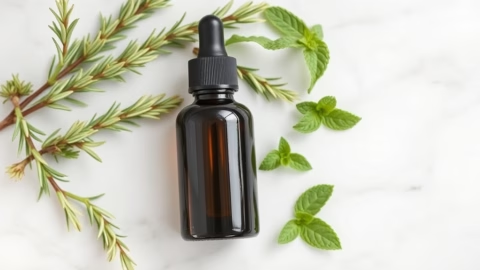
How to Use Rosemary Mint Scalp Oil (And What the Evidence Says)
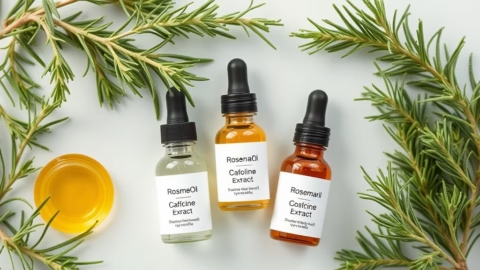
Rosemary mint scalp oil is applied to the scalp, not the hair — and how you use it matters. Here's the correct method, frequency, and what rosemary oil actually does.

Rosemary mint scalp oil is applied to the scalp, not the hair — and how you use it matters. Here's the correct method, frequency, and what rosemary oil actually does.
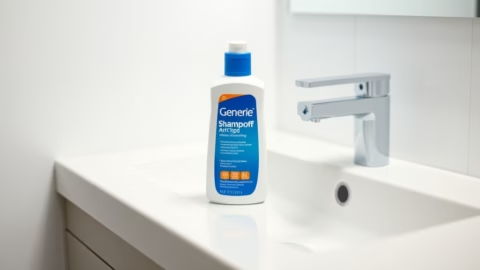
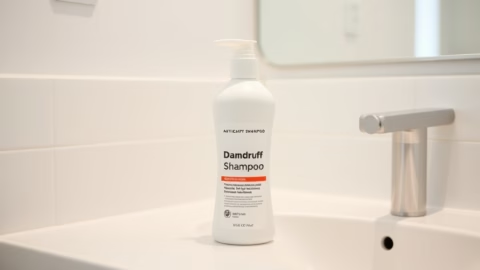
Clinical Strength uses 1% selenium sulfide, not the zinc pyrithione in regular Head & Shoulders. Here's what that changes and which variant to pick.
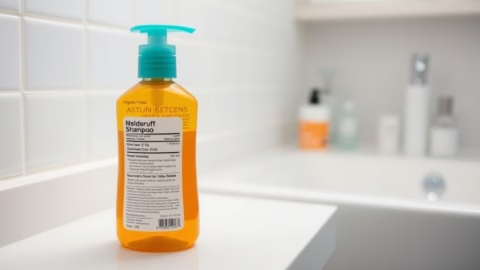
Head & Shoulders is the default dandruff shampoo, but does it actually work — and is the reformulated version still effective? Here's the ingredient science.
Curly and textured hair changes how sebum, product buildup, and dryness behave at the scalp. Here's what a scalp routine actually needs to account for.
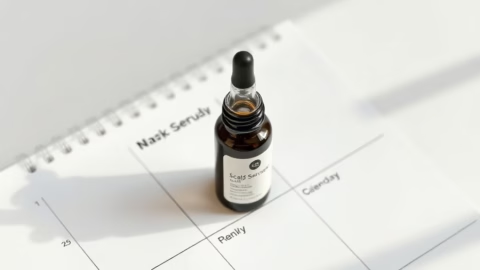
Scalp serum results take longer than most product marketing suggests, and the timeline depends heavily on which ingredient you're using. Here's a realistic timeline.
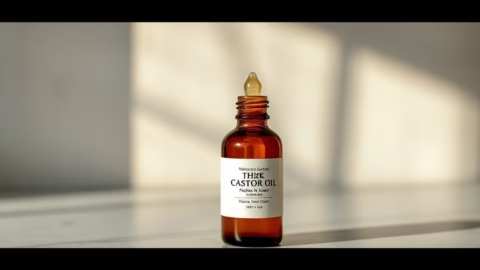
Castor oil is one of the most recommended scalp oils online, but the clinical evidence for hair growth is thin. Here's what it actually does and doesn't do.
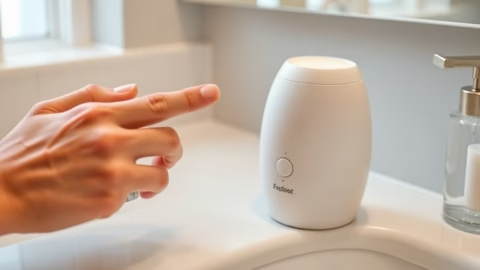
Electric massagers are more consistent, but manual massage has its own advantages. Here's an honest comparison of technique, results, and cost.
Scalp products market a long list of ingredients — biotin, argan oil, peppermint, caffeine, peptides — with varying degrees of clinical evidence behind them. Some have strong, replicated study data. Some have preliminary evidence from small studies. Some have no meaningful evidence at all beyond marketing claims. This is an honest accounting of where the […]
An oily scalp is one of the most common scalp complaints, and it is one of the most frequently mismanaged. The standard response — washing hair more frequently with stripping shampoos — often makes the underlying issue worse by triggering compensatory sebum overproduction. An effective oily scalp routine requires balancing cleansing with scalp microbiome support, […]
Ketoconazole is the active ingredient in Nizoral and is one of the most evidence-supported topical treatments for dandruff and seborrheic dermatitis available without a prescription. Unlike cosmetic anti-dandruff shampoos that reduce visible flaking through mechanical or mild antibacterial action, ketoconazole works by targeting the underlying mechanism of seborrheic dermatitis: the Malassezia yeast that colonizes the […]