
Walk into any beauty retailer and you’ll find dozens of scalp serums promising thicker, fuller hair. The claims vary wildly, and most of the marketing language is deliberately vague. This guide cuts through the noise: what specific ingredients have research behind them, what’s mostly filler, and how to read a label without a chemistry degree.
If you want to skip straight to tested products, our best scalp serum guide covers three lightweight picks we’ve evaluated across ingredient quality, texture, and real-world use. The analysis below will help you understand why those specific formulas ranked where they did.
What a Scalp Serum Actually Is
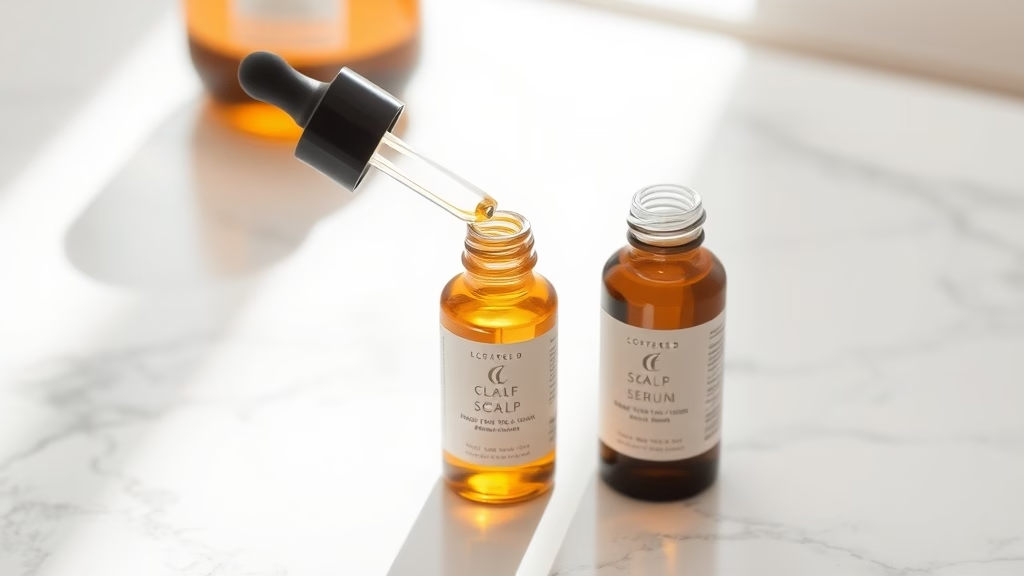
A scalp serum is a leave-in treatment formulated to be absorbed at the scalp rather than the hair shaft. Unlike conditioners, they’re designed to work on skin — unclogging follicles, reducing inflammation, delivering active ingredients where they can actually have an effect. Most are water-based or lightweight oil-based; heavy formulas don’t absorb properly and just sit on the skin.
They’re different from scalp oils, which primarily address moisture and surface feel. For a detailed comparison, see our scalp oil vs scalp serum breakdown.
Ingredients with Research Behind Them
Minoxidil
The only topical ingredient with FDA approval for hair loss. It’s been shown in multiple clinical trials to extend the anagen (growth) phase of the hair cycle and improve blood flow to follicles. Minoxidil serums are available over-the-counter in 2% and 5% concentrations. If hair thinning is your primary concern, this is the one ingredient with the clearest evidence.
Note: minoxidil requires consistent daily use to maintain results, and stopping it typically reverses any gains. If you have a scalp condition or underlying health concern contributing to hair loss, speak with a dermatologist before starting minoxidil — hair loss has many causes, and the right approach depends on identifying which one applies to you.
Peptides (Redensyl, Capixyl, Procapil)
These patented peptide complexes appear in many premium serums as “minoxidil alternatives.” The research behind them is less robust than minoxidil (mostly manufacturer-funded studies rather than independent clinical trials), but there’s enough preliminary evidence that cosmetic dermatologists don’t dismiss them entirely. They work via different mechanisms — targeting stem cells in the follicle bulge rather than blood flow.
If you’re not ready to commit to minoxidil’s daily regimen and don’t have significant clinical hair loss, a peptide-based serum is a reasonable starting point.
Caffeine
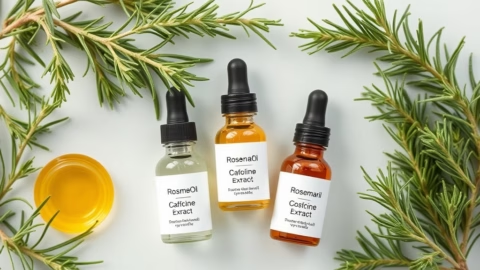
Several peer-reviewed studies have found that caffeine applied topically can penetrate the hair follicle and may counteract the effects of DHT (the androgen linked to pattern hair loss) at the cellular level. The concentration matters — most effective studies used around 0.2% caffeine. Check the ingredient position in any serum claiming caffeine benefits; if it’s listed near the bottom of the INCI list, the concentration is likely too low to do much.
Niacinamide
A form of vitamin B3 with solid anti-inflammatory evidence. It won’t directly stimulate hair growth, but inflamed, irritated scalp skin creates an environment where follicles underperform. Niacinamide at 2–5% helps normalize sebum production and reduce redness — particularly useful for people whose scalp tends to run oily or irritated.
Ingredients to Approach Skeptically
- Biotin — applied topically, biotin doesn’t absorb into the scalp effectively. The biotin-for-hair-growth story is largely about dietary deficiency (which is rare). In a serum, it’s mostly marketing.
- Keratin — hair is made of keratin, but topical keratin molecules are too large to penetrate follicles. It coats the hair shaft; it doesn’t feed the root.
- Most “botanical extracts” without specified concentrations — rosemary, peppermint, and saw palmetto all have some research (rosemary in particular showed comparable results to 2% minoxidil in one small study), but the effective concentration vs. the decorative concentration in most formulas is very different.
How to Apply a Scalp Serum Correctly
Application technique affects absorption significantly more than most people realize:
- Part the hair in sections so you’re applying directly to scalp skin, not hair.
- Apply in small drops along each part, then massage in with fingertips for 60–90 seconds.
- A scalp massager used after application can improve penetration — the mechanical stimulation increases blood flow at the application site.
- Use on a clean, dry or slightly damp scalp — oils, dry shampoo, and product buildup form a barrier that reduces absorption.
Most serums recommend nightly application on a clean scalp. Twice-daily use (if the formula suggests it) is fine; more than that won’t accelerate results and may cause buildup or irritation.
When to See a Dermatologist
Scalp serums are cosmetic products — they work on healthy scalp tissue to optimize its environment for hair growth. They are not treatments for medical causes of hair loss, including alopecia areata, hormonal conditions, nutritional deficiencies, or scalp infections. If your hair loss is sudden, patchy, accompanied by scalp symptoms (burning, pain, unusual flaking), or hasn’t responded to OTC approaches after 6 months, a dermatologist appointment is the right next step.
Getting Started
For most people starting out, a serum combining caffeine + niacinamide + a peptide complex is a reasonable, low-commitment entry point. If you’ve already tried that tier and want something with stronger evidence behind it, minoxidil serums are worth the conversation with your doctor.
Our best scalp serum guide applies these criteria directly to real products — with ingredient analysis, texture notes, and a clear recommendation for each use case. If you’re pairing a serum with an exfoliation routine, our scalp scrub frequency guide covers how often to exfoliate without disrupting the serum’s effects.