
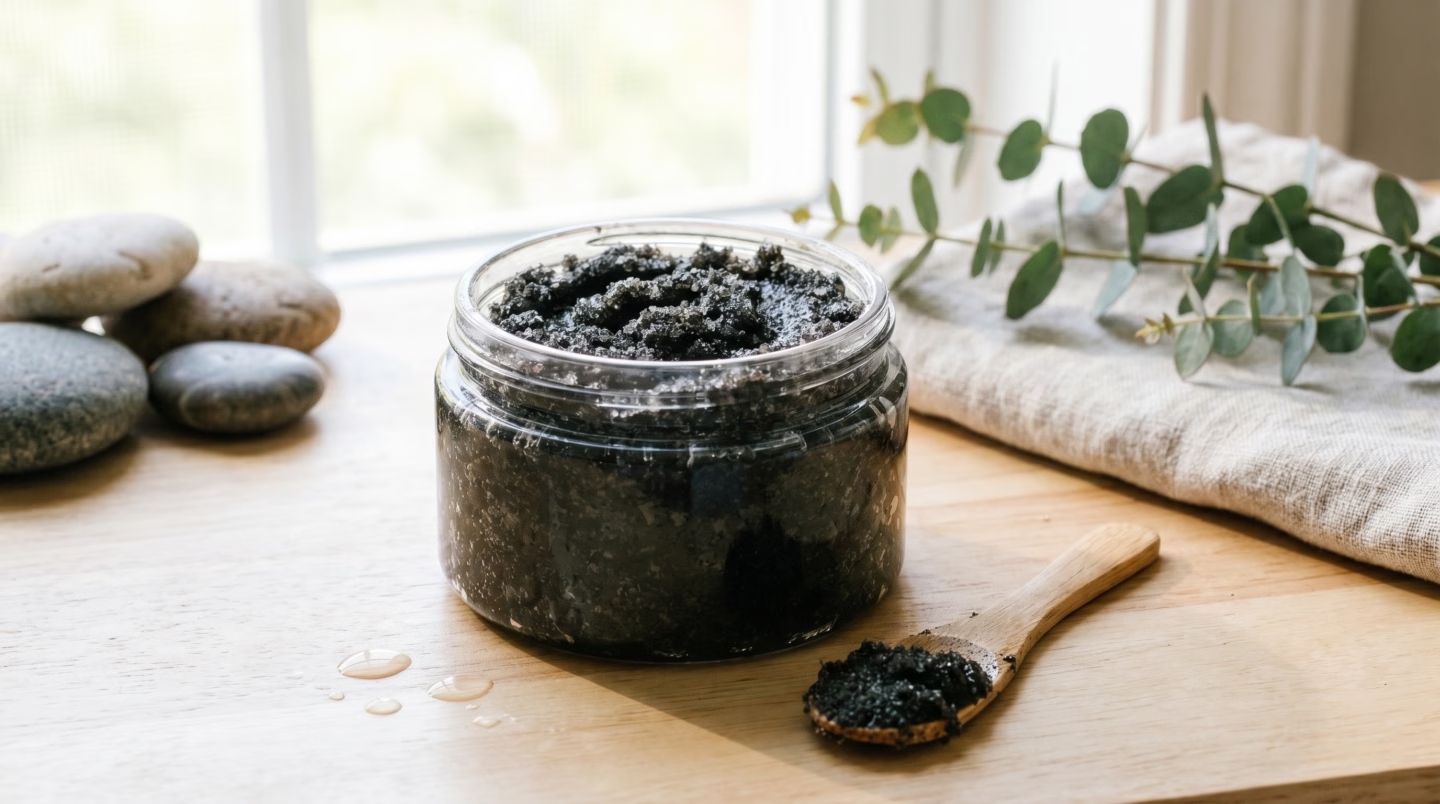
The best scalp scrub can make your whole wash day feel like a reset, sweeping away the product residue, oil, and dead skin that shampoo alone often leaves behind. If your roots feel coated, your part looks dull, or flakes keep reappearing, gentle exfoliation may help. Scalp exfoliation comes in two broad styles. Physical scrubs use fine particles, like sugar or charcoal granules, to manually lift buildup. Chemical exfoliants use acids, such as AHAs and BHAs, to loosen the bonds between dead cells so they rinse away. Both can leave the scalp feeling clearer, and some products blend the two. Below, we walk through our picks, how they differ, and how to choose what suits your scalp.
This article is informational and not medical advice. Persistent, painful, or severe scalp issues, including spreading flakes, sores, or hair loss, warrant a visit to a board-certified dermatologist.
Our top picks at a glance
Each scrub below targets buildup a little differently, so the right one depends on your scalp type and what you find pleasant to use. Here is how our three picks compare at a glance, with names linked to their product pages.
| Scrub | Best for | Exfoliation type | Watch-outs |
|---|---|---|---|
| Briogeo Scalp Revival Charcoal Scrub | Best overall | Physical (charcoal) + tea tree | Can feel drying if overused |
| OUAI Scalp & Body Scrub | Best smelling | Physical (sugar) + gentle acids | Pricey; strong fragrance |
| dpHUE Apple Cider Vinegar Scalp Scrub | Best clarifying | ACV-forward, lightweight rinse | Brief vinegar scent; drying if overused |
Briogeo Scalp Revival Charcoal Scrub – Best Overall
The Briogeo Scalp Revival Charcoal Scrub earns our top spot because it does the core job well: it physically clears buildup. Charcoal and exfoliating particles work through the roots while tea tree contributes a cooling, refreshing tingle that many users enjoy on an oily or congested scalp. In our hands it left hair feeling notably cleaner at the roots, with a lighter, less coated finish after rinsing. It is a satisfying pick for anyone whose scalp tends toward oiliness or who reaches for clarifying washes often.
What we don’t love: because it is an effective physical scrub, it can feel drying if used too frequently, particularly on finer or already dry hair. We’d keep it to roughly once a week and follow with a conditioner on the lengths. Always patch-test and stop if you notice irritation.
See the Briogeo Scalp Revival Charcoal Scrub
Pros and cons
- Pros: physically clears buildup; refreshing tea-tree tingle; well suited to oily scalps.
- Cons: can be drying if overused; the tingle may feel intense for sensitive scalps.
OUAI Scalp & Body Scrub – Best Smelling
If the sensory experience matters to you, the OUAI Scalp & Body Scrub is a treat. It pairs sugar particles with gentle acids to clear buildup, so you get a touch of both physical and chemical exfoliation in one step. Its signature fresh scent is the headline feature and tends to make wash day feel a little more like a spa moment. A practical bonus: it doubles as a body scrub, so it can pull double duty in a small bathroom or a travel bag.
What we don’t love: it sits at the pricier end, and that signature fragrance, while lovely to many, is strong enough that fragrance-sensitive readers may want to approach with caution or patch-test first. As with any scrub, ease in slowly and watch how your scalp responds.
See the OUAI Scalp & Body Scrub
Pros and cons
- Pros: sugar plus gentle acids clear buildup; memorable fresh scent; doubles as a body scrub.
- Cons: pricey; the strong fragrance may not suit sensitive or reactive skin.
dpHUE Apple Cider Vinegar Scalp Scrub – Best Clarifying
For a deep-clean feeling, the dpHUE Apple Cider Vinegar Scalp Scrub leans on ACV to cut through product and oil buildup. It rinses out light rather than heavy, which makes it a good choice when you want clarity without a weighed-down aftermath. It is also formulated to be color-safe, a meaningful detail for anyone protecting a salon color or gloss who still wants a periodic reset at the roots.
What we don’t love: like other clarifying scrubs, it can feel drying if overused, so space it out and condition afterward. The vinegar scent is noticeable in the shower, though in our experience it fades shortly after rinsing rather than lingering on dry hair.
See the dpHUE Apple Cider Vinegar Scalp Scrub
Pros and cons
- Pros: ACV cuts product and oil buildup; lightweight rinse; color-safe.
- Cons: can be drying if overused; brief vinegar scent during use.
How to choose the best scalp scrub
There is no single best scalp scrub for everyone. The right one depends on how your scalp behaves, what you find comfortable, and how often you plan to use it. Use the guidance below to narrow the field before you buy.
Physical vs. chemical (AHA/BHA)
Physical scrubs rely on particles like sugar or charcoal to manually buff away buildup, which can feel immediately satisfying. Chemical exfoliants use acids, such as AHAs and BHAs, to loosen dead cells so they shed more easily, often with less abrasion. Some products combine both. If you like a hands-on, grainy texture, lean physical. If your scalp reacts to scrubbing, a gentler acid-based formula may suit you better.
Match it to your scalp type
Oily or buildup-prone scalps often tolerate, and appreciate, more assertive scrubs like a charcoal or ACV formula. Dry or sensitive scalps generally do better with gentler, less frequent exfoliation and a conditioning follow-up. If your scalp is reactive, prioritize fragrance-light options and always patch-test on a small area first.
How often to use one
For most people, once a week is a sensible starting cadence, adjusting up or down based on how your scalp feels. Overdoing it, whether with physical grit or acids, can leave the scalp feeling tight or dry. Less is often more. If you notice irritation, redness, or increased flaking, scale back and give your scalp time to recover.
Pair it with a massager
A silicone scalp massager can help you distribute a scrub evenly and work it gently through the roots without using your nails. It also makes the process feel more relaxing. For more on tools, see our guide to the best scalp massager, and consider a follow-up serum if your scalp tends to feel dry.
How we evaluate
Coverage on this site is documentation-based. We read current manufacturer pages and manuals, ingredient and specification panels, packaging information where it is publicly visible, retailer listings, and applicable regulatory or certification records. We state which source a claim comes from.
A page does not say a product was bought, consumed, worn, brewed, or laboratory-tested unless it publishes a dated protocol, the sample source, the conditions, and the evidence. We do not publish invented prices, stock levels, certifications, ratings, or test results, and product pages carry no star score.
Scalp product comparisons focus on the active ingredient and its concentration where a drug facts panel exists, the full INCI list, the format and how it is meant to be applied, and the strength of published evidence for the active itself rather than for a brand.
Results on hair and scalp vary by person and condition. We do not describe before-and-after outcomes, and we do not present ingredient evidence as a promise of individual results.
Frequently asked questions
How often should I scrub my scalp?
For many people, about once a week is a reasonable starting point, then adjust based on how your scalp feels. Oily scalps may handle it more often; dry or sensitive scalps usually prefer less. If your scalp feels tight, irritated, or flakier afterward, scale back.
What’s the difference between dandruff and buildup?
Buildup is the residue of oil, sweat, and styling products that accumulates at the roots, and a scrub can help lift it. Dandruff and flaking can have other causes, including skin conditions, that exfoliation alone may not address. If flakes are persistent, itchy, or severe, a dermatologist can help identify the cause.
Can scalp scrubs cause shedding?
Gentle, occasional exfoliation is not generally expected to cause hair loss, though vigorous scrubbing or overuse can stress the scalp and hair. It is also normal to see some loose hairs come out during washing simply because they were already shed. If you notice a meaningful increase in shedding, ease off and consider speaking with a dermatologist.
Are scalp scrubs safe for a sensitive scalp?
Many sensitive scalps tolerate gentle exfoliation, but caution helps. Choose fragrance-light, milder formulas, patch-test first, use them less often, and condition afterward. Stop immediately if you experience burning, redness, or irritation, and check with a professional if symptoms persist.
Are scalp scrubs safe for color-treated hair?
Some scrubs, like the dpHUE ACV option, are formulated to be color-safe, which is worth looking for if you color your hair. When in doubt, check the label and, for fresh color or treatments, ask your colorist about timing.
Physical or chemical scrub for buildup?
Both can clear buildup. Physical scrubs feel more immediate and tactile; chemical exfoliants tend to be gentler on the skin’s surface. Choose based on your scalp’s sensitivity and the texture you enjoy, or try a hybrid formula that offers a bit of both.
The verdict
If you want one reliable pick, the Briogeo Scalp Revival Charcoal Scrub is our best overall for clearing buildup with a refreshing finish. Choose the OUAI Scalp & Body Scrub if scent and a multitasking formula matter most, or the dpHUE Apple Cider Vinegar Scalp Scrub for a lightweight, color-safe clarifying rinse. Whichever you pick, start gently and listen to your scalp.
Browse the full scalp scrubs category to compare options, and round out your routine with our guides to the best scalp massager and the best scalp serum. Remember, this guide is informational and not a substitute for medical advice; persistent or severe scalp concerns warrant a board-certified dermatologist.