

If you’ve ever wondered how to exfoliate scalp skin without irritating it, you’re in the right place. Just like the skin on your face, your scalp can accumulate dead skin cells, excess oil, product residue, and dry flakes over time. Gentle exfoliation helps lift that buildup so your hair feels fresher and your scalp feels more comfortable. The key word here is gentle — more pressure and more frequency are not better, and an over-scrubbed scalp can end up irritated rather than refreshed.
This guide walks you through the why and the how, with five easy steps you can do at home. It’s written to be approachable for beginners while still being honest about what exfoliation can and can’t do.
This article is informational and not medical advice. If you have a persistent or severe scalp issue — ongoing itching, painful flaking, redness, or hair loss — please see a board-certified dermatologist.
Why Exfoliate Your Scalp at All?
Your scalp sheds skin cells constantly, and those cells can mix with sebum (your natural oil) and leftover styling products. When that mixture lingers, it can look like dull flakes, feel slightly itchy, or leave hair looking weighed down at the roots. A periodic exfoliation session can help sweep away surface buildup so your usual shampoo and conditioner can do their jobs more effectively.
It’s worth setting expectations, though. Exfoliating is a cosmetic refresh, not a cure. If you’re dealing with what seems like persistent dandruff or a flaky condition that keeps returning, exfoliation alone may not be enough, and a professional opinion is the smarter route.
Physical vs. Chemical Exfoliation
There are two broad approaches, and neither is automatically better — it depends on your scalp and your comfort level.
Physical (Manual) Exfoliation
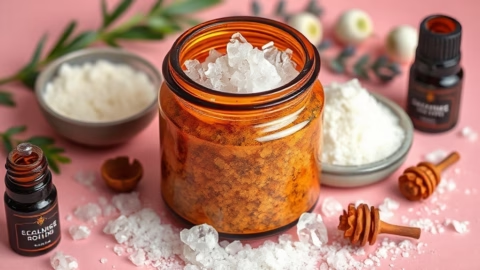
This uses gentle friction to dislodge buildup. Think granular scalp scrubs with fine particles, or a soft scalp brush. Physical exfoliation gives you immediate, tangible feedback — you can feel it working — but it’s easy to overdo, so a light hand matters.
Chemical Exfoliation
This relies on mild acids (like salicylic or lactic acid) to loosen dead cells without scrubbing. It can feel more even and less abrasive, which some sensitive scalps prefer. The trade-off is that it’s less obvious in the moment and still requires patience and moderation. For more on the science of sloughing away dead cells, see this overview of exfoliation in cosmetology.
What You’ll Need
You don’t need much to get started. A typical kit includes a scalp scrub or a chemical exfoliant formulated for the scalp, your regular shampoo and conditioner, and optionally a soft scalp brush or massager to help distribute product. Lukewarm water and a few quiet minutes round things out.
If you’re shopping for a product, a well-formulated option like the Briogeo scalp scrub is a beginner-friendly place to start because it balances effective buildup removal with a relatively cushioned, non-harsh feel.
How to Exfoliate Your Scalp: 5 Gentle Steps
Here’s the simple routine. Move slowly, and stop if anything stings or feels uncomfortable.
Step 1: Brush or Section Dry Hair
Before water touches your head, gently brush through dry hair to remove tangles and loosen surface flakes. Then part your hair into a few sections — this makes it far easier to reach the scalp itself rather than just coating your strands. Sectioning also helps you apply product evenly and avoid missing spots at the back of the head.
Step 2: Dampen Your Scalp
Wet your hair and scalp thoroughly with lukewarm water. Damp skin is more receptive and a little more forgiving, and water helps any scrub or exfoliant spread smoothly instead of dragging. Avoid hot water, which can leave the scalp feeling tight and dry.
Step 3: Apply Your Scrub or Chemical Exfoliant
Working one section at a time, apply a small amount of scrub or chemical exfoliant directly to the scalp, not the lengths of your hair. A little goes a long way. If you’re using a chemical exfoliant, follow the label for how long to leave it on before rinsing.
Step 4: Massage Gently With Fingertips or a Brush
Using the pads of your fingertips — never your nails — massage in slow, small circles. If you prefer, a soft scalp brush can do the same job with even, light pressure. The goal is to loosen buildup, not to scour your skin, so keep the touch feather-light and spend just a minute or two total.
Step 5: Rinse Thoroughly, Then Condition
Rinse completely with lukewarm water until no grit or residue remains. Follow with your regular shampoo if needed, then apply conditioner to the mid-lengths and ends to restore softness. Exfoliating can leave hair feeling clean but slightly stripped, so conditioning afterward helps rebalance things.
How Often Should You Exfoliate — and When to Be Careful
For most people, exfoliating once a week is plenty, and some scalps do better with every other week. The single most common mistake is overdoing it: scrubbing too hard, too often, or both. If you notice redness, increased flaking, tightness, or tenderness, scale back immediately.
Sensitive scalps deserve extra caution. Start with the gentlest option, use it less frequently, and patch-test a new product on a small area first. If you have an active scalp condition, broken skin, sunburn, or a recent chemical treatment like color or relaxer, hold off until your scalp has fully recovered. For more on how often is appropriate, our guide on how often to use a scalp scrub goes deeper.
Again, this is general information, not medical advice — anything persistent or painful is worth a dermatologist’s eyes.
Frequently Asked Questions
Can I exfoliate my scalp every day?
No, daily exfoliation is too much for most people and can irritate the skin barrier. Once a week is a sensible starting point, adjusting based on how your scalp responds.
Will exfoliating help with dandruff?
It may help reduce the appearance of surface flakes by clearing buildup, but it isn’t a treatment for true dandruff or other flaky conditions. Persistent dandruff is best evaluated by a professional.
Can I use a face scrub on my scalp?
It’s better not to. Face scrubs aren’t formulated for the scalp or for use around hair, and the particles or actives may be the wrong fit. Choose a product designed specifically for scalp exfoliation.
What if exfoliating makes my scalp itch?
Stop and rinse thoroughly. Mild, brief tingling can be normal with some products, but itching, burning, or redness is a signal to stop and reassess — and to consult a dermatologist if it continues.
The Bottom Line
Learning how to exfoliate scalp skin is really about restraint: choose a gentle method, keep your touch light, rinse and condition well, and don’t do it too often. Done thoughtfully, an occasional exfoliation session can leave your scalp feeling clean and your roots looking fresher. Listen to your scalp, ease off at the first sign of irritation, and when something feels off or won’t resolve, let a board-certified dermatologist take a look.